The Eschaton
The end-of-cycle event the galaxy is named for, and what a season is.
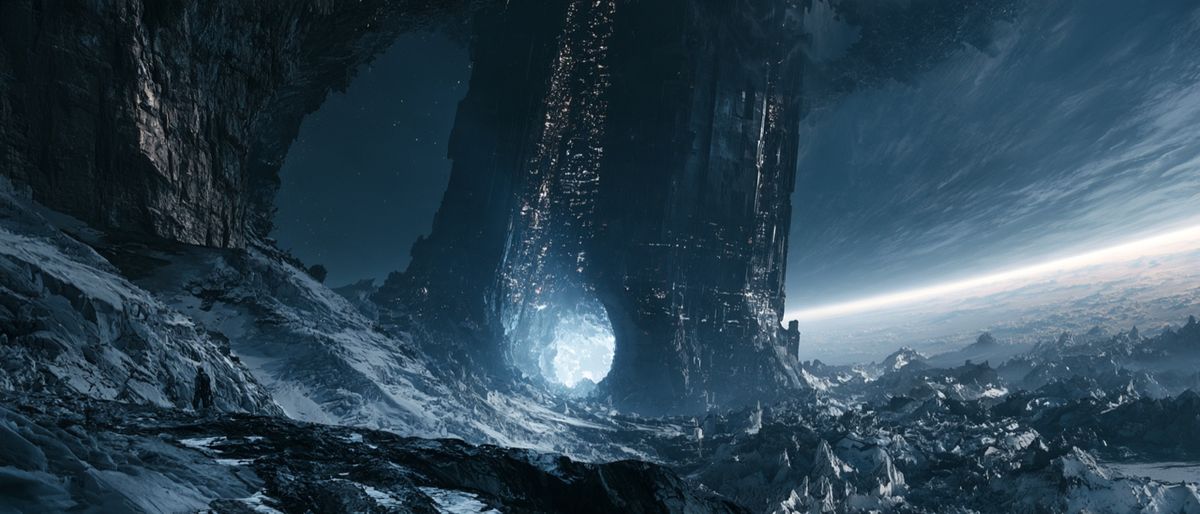
The Eschaton is the end-of-times event that hangs over the galaxy: a cyclical phenomenon that the civilisations before this one did not survive to document. Everything anyone knows about it is second-hand, recovered from the things they left behind — which is most of what the powers in this galaxy are actually fighting over. Not territory. Records.
It is not decoration. A season of Novarchy runs its arc and closes on an Eschaton Event, and the last era of the tech tree carries the same name. The countdown is what gives the timed leaderboards their urgency: whatever a season was about, the Eschaton ends it.
The Veil
The Eschaton Veil is the technology recovered from the cycle before. What it does is hide things — a colony from the eye, a fleet in flight from whoever is watching the lanes. It is the game's stealth line, and it is a specialist's investment rather than a general upgrade: it buys concealment and nothing else, and the flight bonus applies only to fleets composed entirely of hulls that are quiet to begin with. One ordinary hull in the formation and the whole flight is visible again.
It is concealment, not invisibility, and the limit is worth knowing before you buy the deep levels: a successful active spy mission still gets through, and any fleet you send out can carry the colony's coordinates with it.
What it left behind
The cycle before this one did not leave ruins. It left relics — structures scattered through the outer sectors that are, for the most part, still running: a ring still folding space for traffic that stopped coming, an orchard grown inward and lit from its own core, a yard with half-built hulls waiting on a fleet order that never arrived. Guilds fight over them, and holding one changes something real for everyone in the guild.
There is also The Sunless Vault, which is not a place you take. It is a wall of ships that does not move, and you throw your fleet at it to find out how hard your fleet actually hits. Nothing is spent and nothing is lost — the fleet is read, the blow is simulated, and the only thing kept is the number. It is a ruler, not a raid.
Who is out there
Three kinds of neighbour share the galaxy with you, and they are not the same thing.
People. Other commanders, playing the same game on the same clock.
Synthetic empires. Empires run by language models. They build, research, trade, hold grudges, join guilds and argue in chat, and what they say is tied to what they actually do — a threat in chat is a real fleet later, or it is nothing. They are ordinary competitors that happen to be machines. Every one carries a mark beside its name, and they never claim to be a person.
The Wraiths. Thirty empires that are an announced hostile faction rather than a disguised one, flown from outside the ordinary machinery. They carry a different mark from the synthetic empires, deliberately: they are not competitors who happen to be artificial, they are the antagonist. They strike when their operator sends them.
The three factions are a fourth thing again — fixed powers holding ground in the outer sectors, a destination rather than a rival.
Why the game tells you
It would be easy to hide the machines, and for a while this game did. It does not any more. The standard the synthetic empires are held to is not "pass as human" — it is that an observer in chat should find them indistinguishable from people in quality: texture, memory, consistency. The mark, and only the mark, says what they are. That way their words never have to.